

Tesamorelin 10 mg: What That Number Really Means (And Why It’s Not the Dose)
Lately, Tesamorelin has been getting a lot of attention, especially in conversations around fat loss and body composition. One detail that keeps coming up is the “10 mg dose”—but that’s also where a lot of confusion begins.
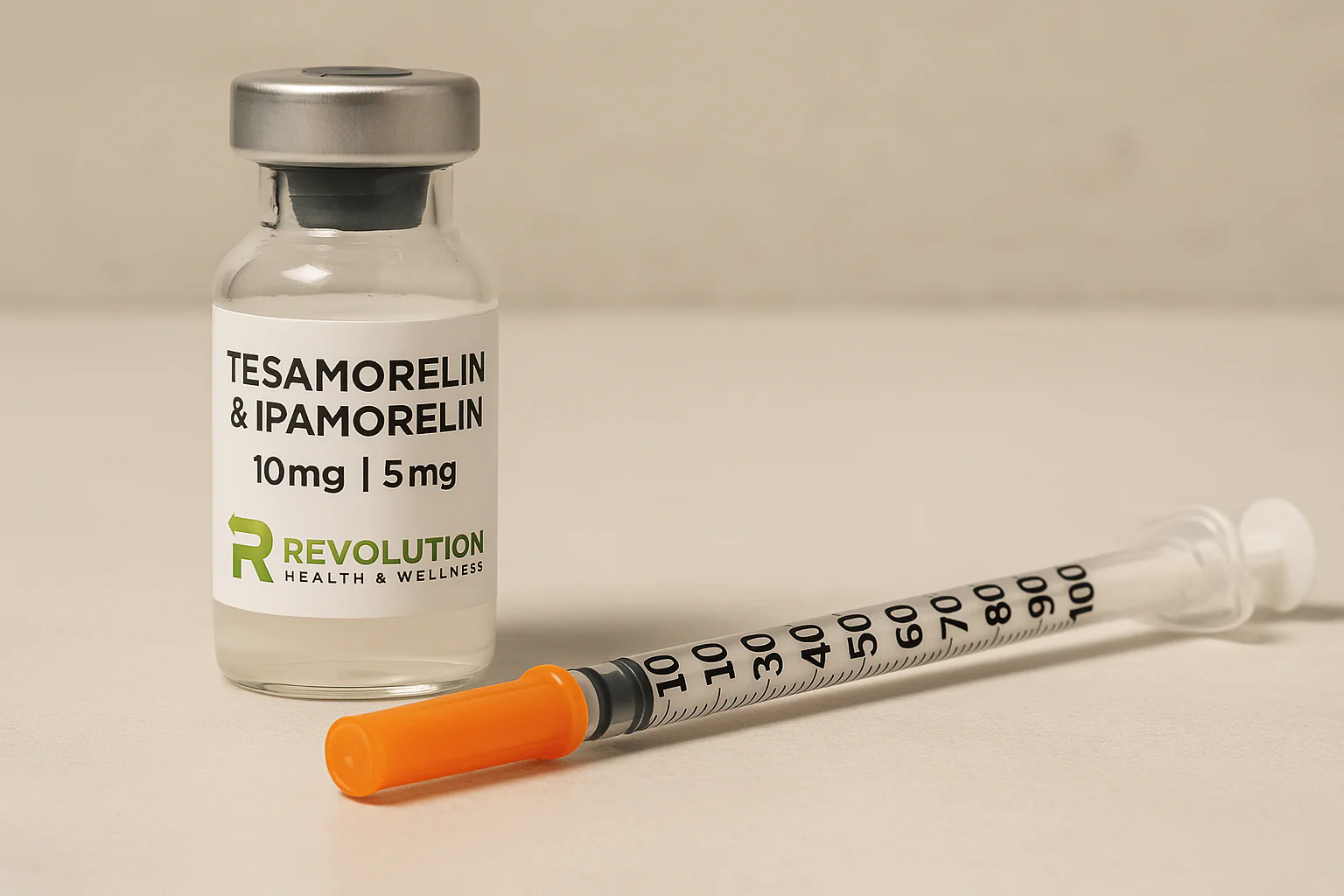
The first thing to understand is simple: 10 mg is not the daily dose. It refers to the size of the vial. Tesamorelin typically comes as a lyophilized powder in a 10 mg vial, which is then reconstituted before use. The actual commonly used dose is 2 mg per day, administered via subcutaneous injection. That means a single vial is used across multiple doses, not all at once.

So what exactly is Tesamorelin?
Tesamorelin is a synthetic analog of growth hormone–releasing hormone (GHRH). Instead of acting like growth hormone directly, it stimulates your body to produce its own. This happens through the pituitary gland, increasing natural growth hormone pulses and, in turn, raising levels of IGF-1.
This mechanism is important. It allows for a more physiological approach compared to taking external growth hormone, meaning the body still regulates the process to some extent.
What really sets Tesamorelin apart is its effect on visceral fat. This is the deeper abdominal fat that surrounds internal organs and is strongly linked to metabolic issues like insulin resistance and cardiovascular risk. Unlike traditional weight loss methods that reduce fat more generally, Tesamorelin has been shown to specifically target this high-risk fat depot.
That’s also why it was originally developed for patients with HIV-associated lipodystrophy, where visceral fat accumulation is a major concern.
But here’s where expectations need to be realistic.
Tesamorelin is not a “quick fix.”
Yes, it can support fat loss. Yes, it can improve body composition. But it doesn’t replace the fundamentals. Without proper nutrition, consistent training, and adequate recovery, the results will be limited—and often temporary.
In fact, one of the most important things to understand is that results can reverse after stopping therapy if lifestyle habits aren’t in place. The body tends to return to its baseline when the stimulus is removed.
This is why Tesamorelin works best as part of a broader strategy, not as a standalone solution.
There are also safety considerations. Because it affects the growth hormone axis, monitoring IGF-1 levels is essential. More is not always better—excessively high IGF-1 can increase health risks. Some users may also experience side effects such as water retention, joint stiffness, or mild increases in blood glucose levels.
These effects are not guaranteed, but they highlight the importance of using this therapy with proper medical supervision.
Another thing worth noting is the timeline. Tesamorelin does not deliver instant results. Changes in visceral fat and overall body composition take time and consistency. It’s a gradual process that depends heavily on adherence—not just to the therapy, but to daily habits.
And that brings us to the bigger picture.
Whether it’s Tesamorelin or any other metabolic therapy, the same principle applies: no compound replaces consistency. Pharmacology can support physiology, but it doesn’t override behavior long-term.
So when you see “Tesamorelin 10 mg,” think of it as packaging—not a protocol.
Used correctly, Tesamorelin can be a valuable tool. But like any tool, its effectiveness depends on how—and in what context—it’s used.